Namibia and Botswana: from the dunes of Sossusvlei to the Okavango Delta

Namibia and Botswana: from the dunes of Sossusvlei to the Okavango Delta

Africa – Namibia, Africa – Botswana
About the trip

Sossusvlei, Sandwich Harbour, the Skeleton Coast and Etosha with a private driver-guide, followed by a flight to the Okavango Delta and Linyanti.

On this trip, you’ll experience two very different worlds, one after the other. Namibia is vast and quiet, a land of clean lines: red dunes, gravel plains and a coastline where mist hangs over shipwrecks. Botswana is the complete opposite: water, greenery and plenty of wildlife.

For the first six days, you’ll be travelling with your own driver-guide, because in Namibia the road itself is a major part of the journey: the Spreetshoogte Pass, the horizon, the stops along the way and the final stretch with the ocean by your side. Where long drives add nothing to the experience, you’ll switch to small aeroplanes. The camp on the Skeleton Coast can only be reached by air, and the drive from Hoanib to Etosha would take well over seven hours. With a direct charter flight from Ongava to Maun, you’ll save a whole day and avoid a detour via Johannesburg.

Where possible, you’ll stay in one place for three nights. If you spend just one night in a safari camp, you’ll only have one morning and one evening in the bush, which isn’t long enough to see anything. Only in Swakopmund will you not be staying in a luxury lodge, but in a good four-star hotel. You’ll be staying there for two nights anyway, as Sandwich Harbour and the Walvis Bay lagoon are among Namibia’s highlights.

Read more
Journey
19-day private tour
FromIndicative price per person based on two people sharing, for this 19-day trip in May. Includes a flight worth €1,000, administration fees, the Calamity Fund and SGR. Flight and hotel prices vary from day to day; your actual price will depend on your travel dates, room type and flights. From June to October inclusive and over Christmas, the price is higher.
€52,150
Exclusive The suite or the best room, at intimate establishments, and all in complete privacy.
Highlights
Deadvlei
Hot-air balloon ride
Sandwich Harbour
Skeleton Coast
Okavango Delta
Namibia and Botswana: from the dunes of Sossusvlei to the Okavango Delta

Flights: You’ll fly to Windhoek with one stopover, either via Frankfurt or via Johannesburg. On the return journey, you’ll fly from Kasane via Johannesburg to Amsterdam.

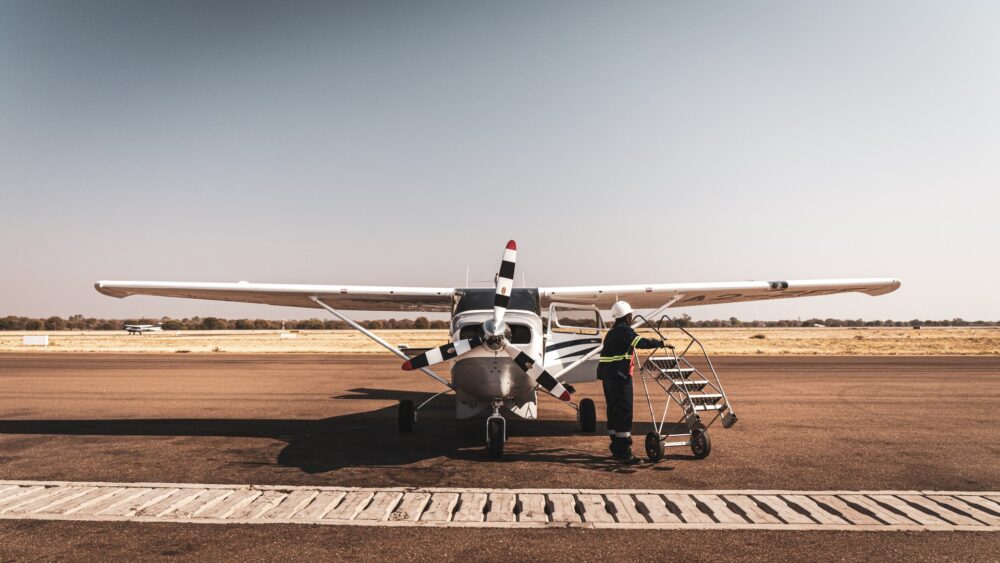
Itinerary: From day 1 to day 6, you’ll travel with your own driver-guide in a Toyota Land Cruiser, equipped with a cool box, nature books and binoculars. After that, you’ll fly in small aeroplanes: Hoanib Skeleton Coast Camp can only be reached by air, and the journey from Hoanib to Etosha would take over seven hours. In Botswana, too, you’ll fly from camp to camp.

Swakopmund: There is no luxury lodge on the coast. The Strand Hotel is the best place to stay in town: comfortable and right by the sea, but no more than a good four-star hotel. We’ve included it in the itinerary because the coast is part of the route, and because Sandwich Harbour and the Walvis Bay lagoon are among Namibia’s highlights. If you’d rather skip the coast, you can fly directly from Sossusvlei to the Skeleton Coast.

Botswana: We recommend the direct charter flight from Ongava to Maun. It costs more, but saves you a whole day and avoids the detour via Johannesburg. If you’re staying at a camp for three nights or more, you’ll have your own vehicle and guide there.

Best time to visit: May to October: this is the dry season, when you’ll see plenty of wildlife. In July and August, it’s cold in Namibia in the early morning, sometimes no more than five degrees. The hot-air balloon ride and the desert are also lovely in March and April.

Good to know: Dutch nationals require a visa for Namibia; you can apply for this online in advance or arrange it on arrival. No visa is required for Botswana. Your passport must be valid for at least six months and have two blank pages.

Variants: If you’d like to keep it shorter (fourteen days), you can skip Swakopmund and Etosha and fly directly from Sossusvlei to the Skeleton Coast. This leaves you with Sossusvlei, the Skeleton Coast, the Okavango and Linyanti. If you’d like a longer trip (24 days), add two nights at the Victoria Falls, staying at Matetsi Victoria Falls River Lodge, and three nights in Cape Town. If you’d prefer to take it at a more leisurely pace, you can fly from Windhoek to Sossusvlei in 55 minutes: you’ll miss the Spreetshoogte Pass, but you’ll save half a day.
Days 1 to 2 · Windhoek · 1 night
Omaanda. Fifteen round cottages by Zannier on their own nature reserve.

Days 2 to 5 · Sossusvlei · 3 nights
Little Kulala, with its own gate into the park. Another option: andBeyond Sossusvlei Desert Lodge.

Days 5 to 7 · Swakopmund · 2 nights
Strand Hotel Swakopmund. Right by the sea.

Days 7 to 10 · Skeleton Coast · 3 nights
Hoanib Skeleton Coast Camp. Eight rooms in a private concession.

Days 10 to 13 · Etosha · 3 nights
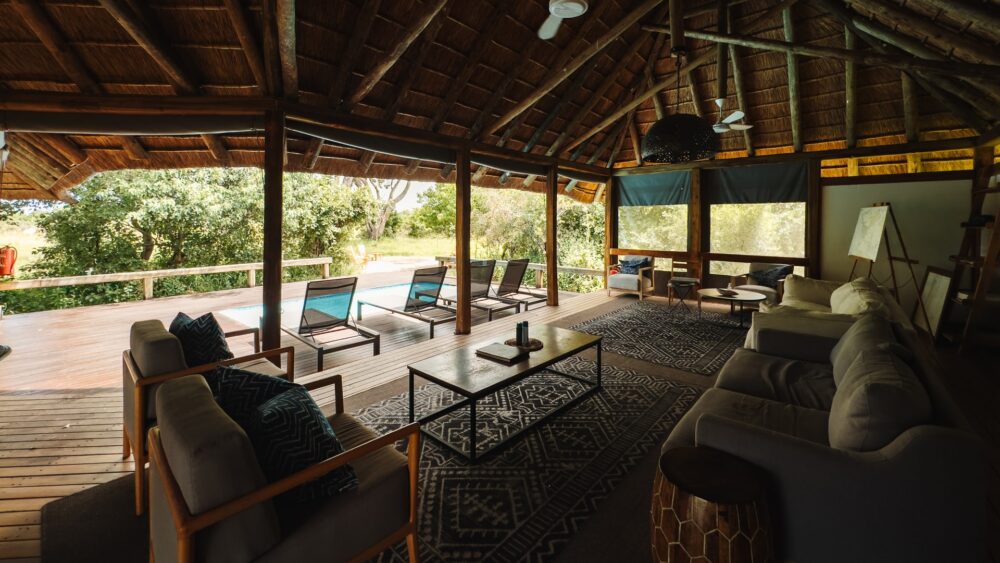
Ongava Lodge. Chalets on a hill above a floodlit waterhole, in the private reserve on the edge of the park.

Days 13 to 16 · Okavango Delta · 3 nights
Mombo Camp, on Chief’s Island. Alternatively: Duba Plains Camp.

Days 16 to 19 · Linyanti · 3 nights
Zarafa Camp. Four tents on Lake Zibadianja.

A total of 18 nights at seven different locations.

Anyone who’d like to find out more in advance can have a listen here:

The Big Podcast Lesson #65: Namibia

You’ll land in the morning and drive to Omaanda in half an hour: fifteen round cottages set in a private reserve covering 9,000 hectares. There, you’ll immediately be greeted by tranquillity and stunning views. You’ll meet your driver-guide and, in the afternoon, drive through the reserve, past rhinos, giraffes and oryx. You’ll round off the day with a sundowner on the rocks.

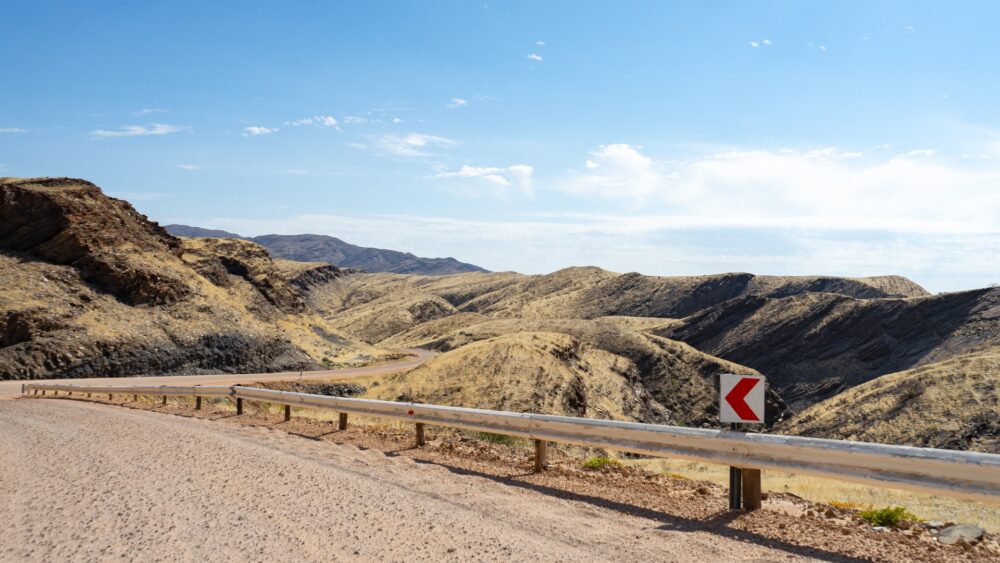
You’ll drive along gravel roads to the Namib. You’ll take the Spreetshoogte Pass, the steepest pass in the country; the view is well worth the detour. Halfway there, stop off in Solitaire for some apple pie. Little Kulala is situated on a private reserve with its own gate into the park. There are beds on the roof, so you can sleep under the stars.

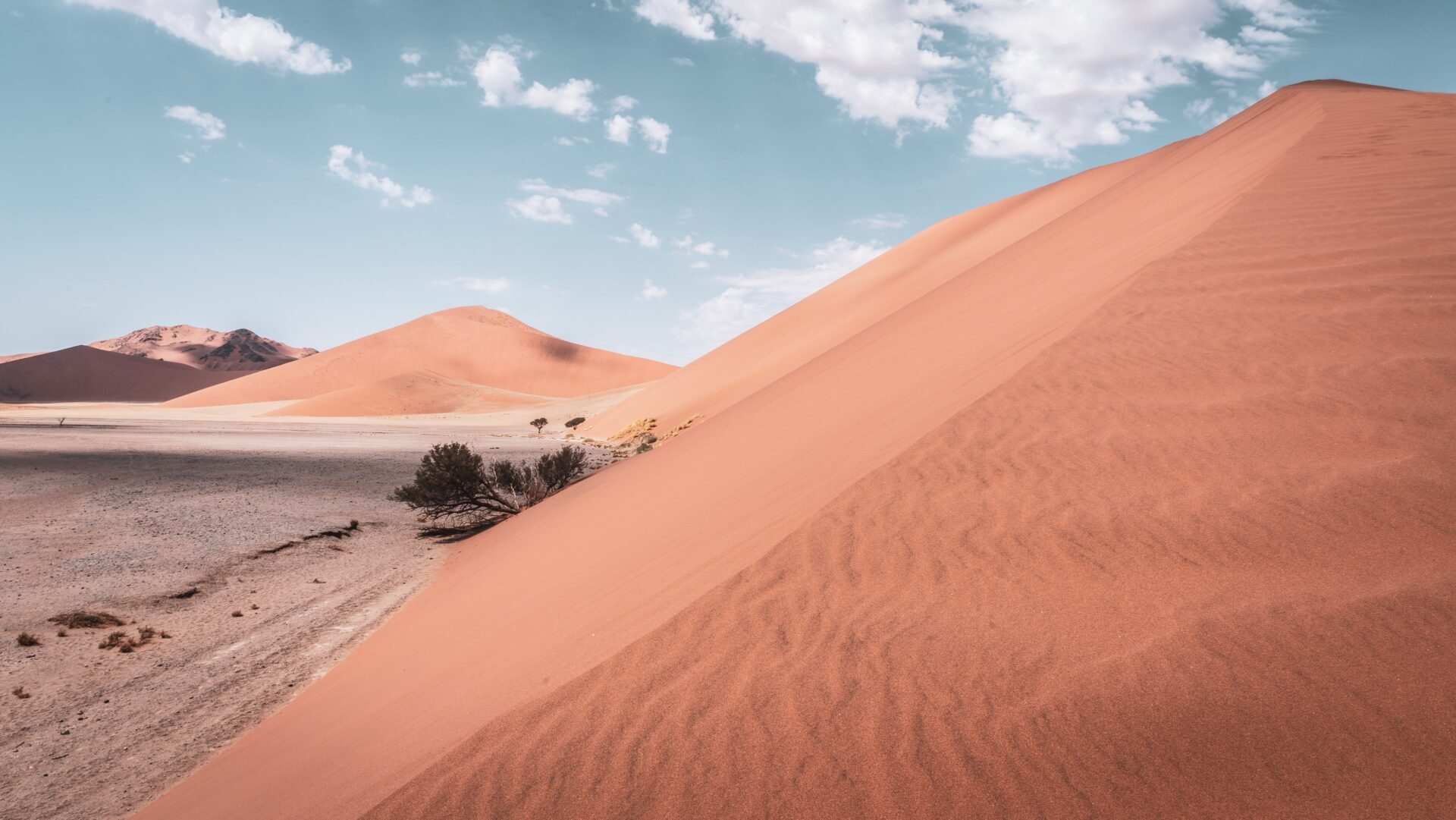
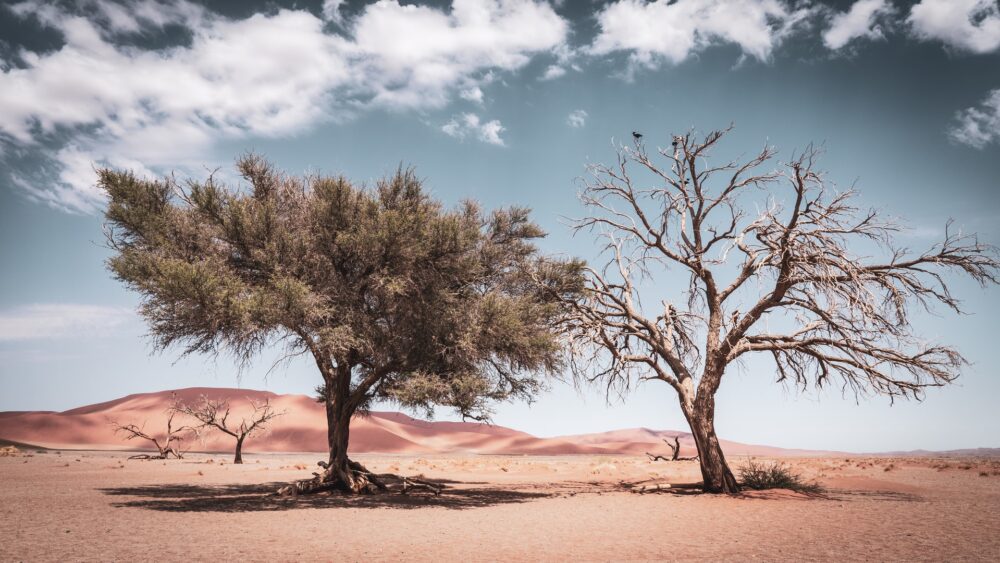
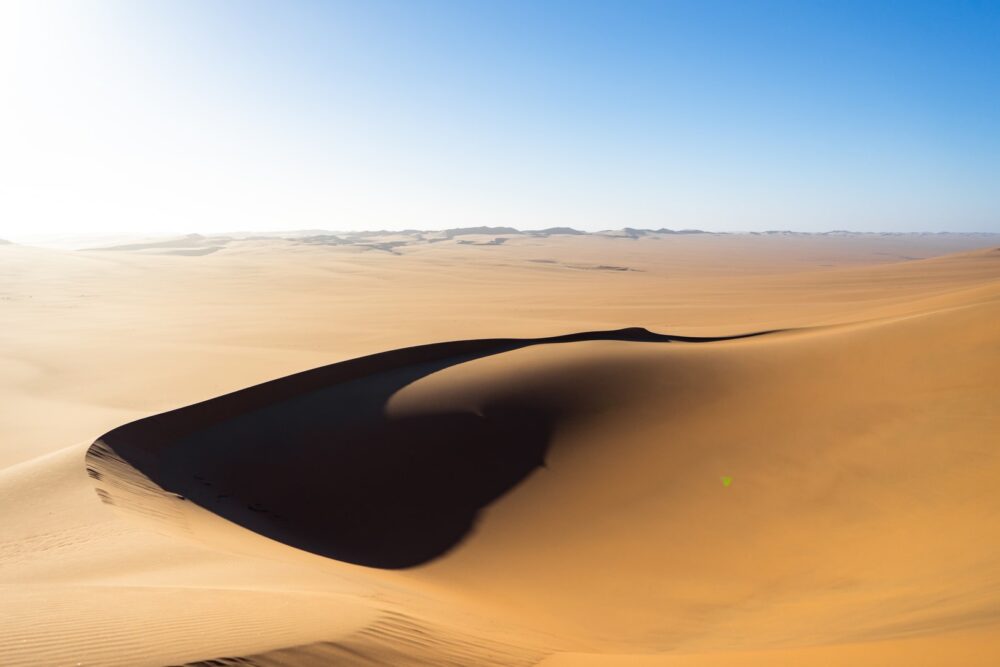
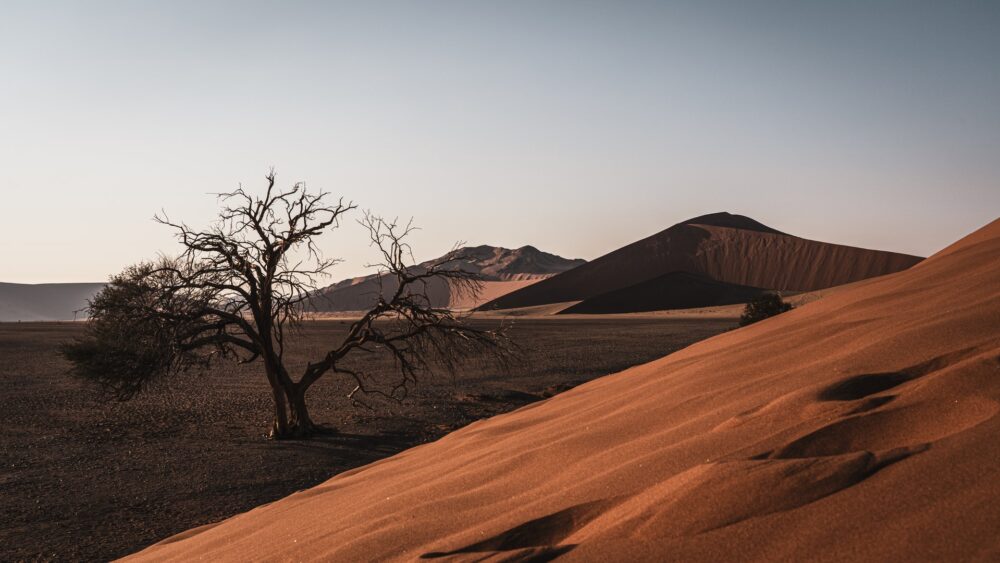
You’ll set off at first light and drive into the park, heading for Dune 45 and Sossusvlei. You’ll cover the final stretch to Deadvlei in an off-road vehicle. The dead camel thorn trees on the white clay soil, with the orange dune behind them, are Namibia’s most famous sight. At seven o’clock in the morning, you’ll be virtually alone there. In the afternoon, when it’s hot, you’ll stay at the lodge.

At sunrise, you’ll spend an hour floating in a hot-air balloon over the sea of dunes. After landing, you’ll enjoy breakfast with champagne in the middle of the desert. In the afternoon, you can go on a quad bike or e-bike ride, or simply do nothing. In the evening, you’ll gaze at the stars: the Namib is one of the darkest places in the world.

You’ll drive through the Namib-Naukluft Park, over the Kuiseb Pass and past the Tropic of Capricorn to the Atlantic coast. For the final few kilometres, the ocean runs alongside you. Swakopmund is a German colonial town, cool and misty: a strange but pleasant interlude between two deserts.

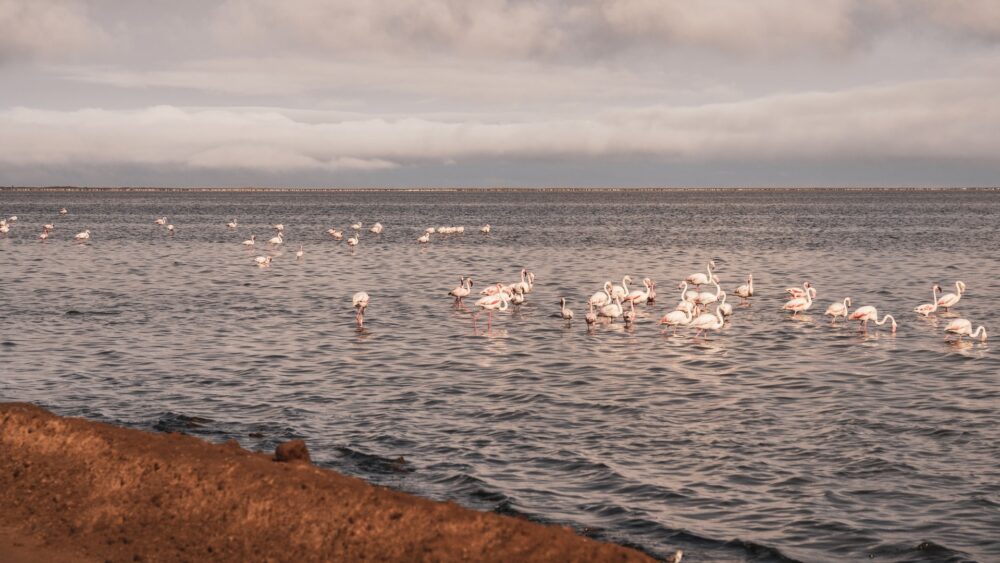
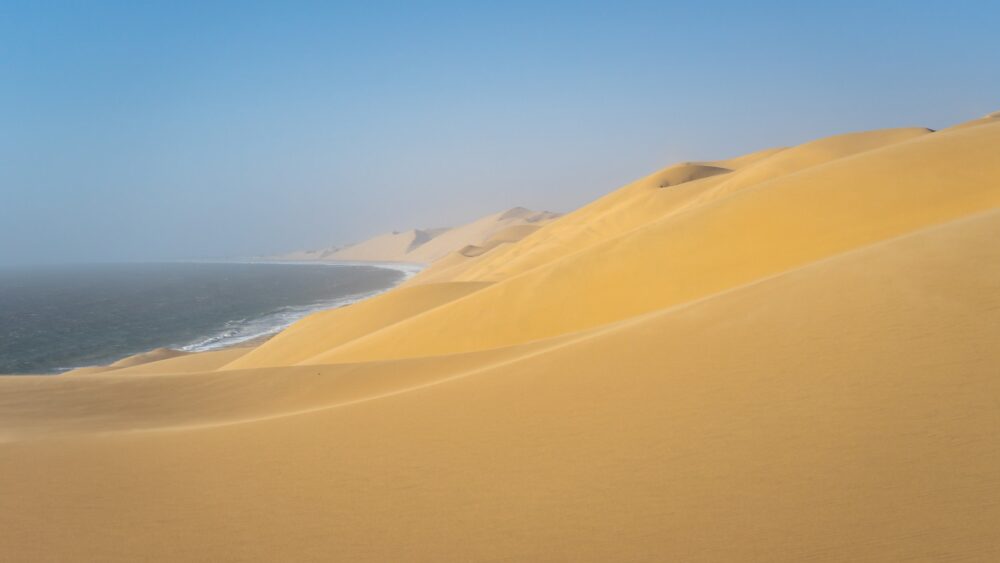
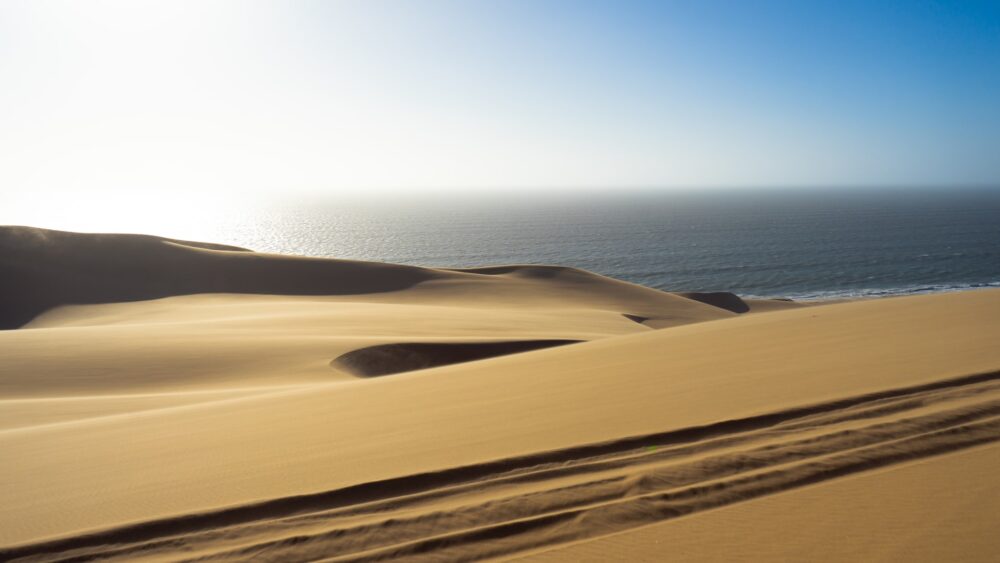
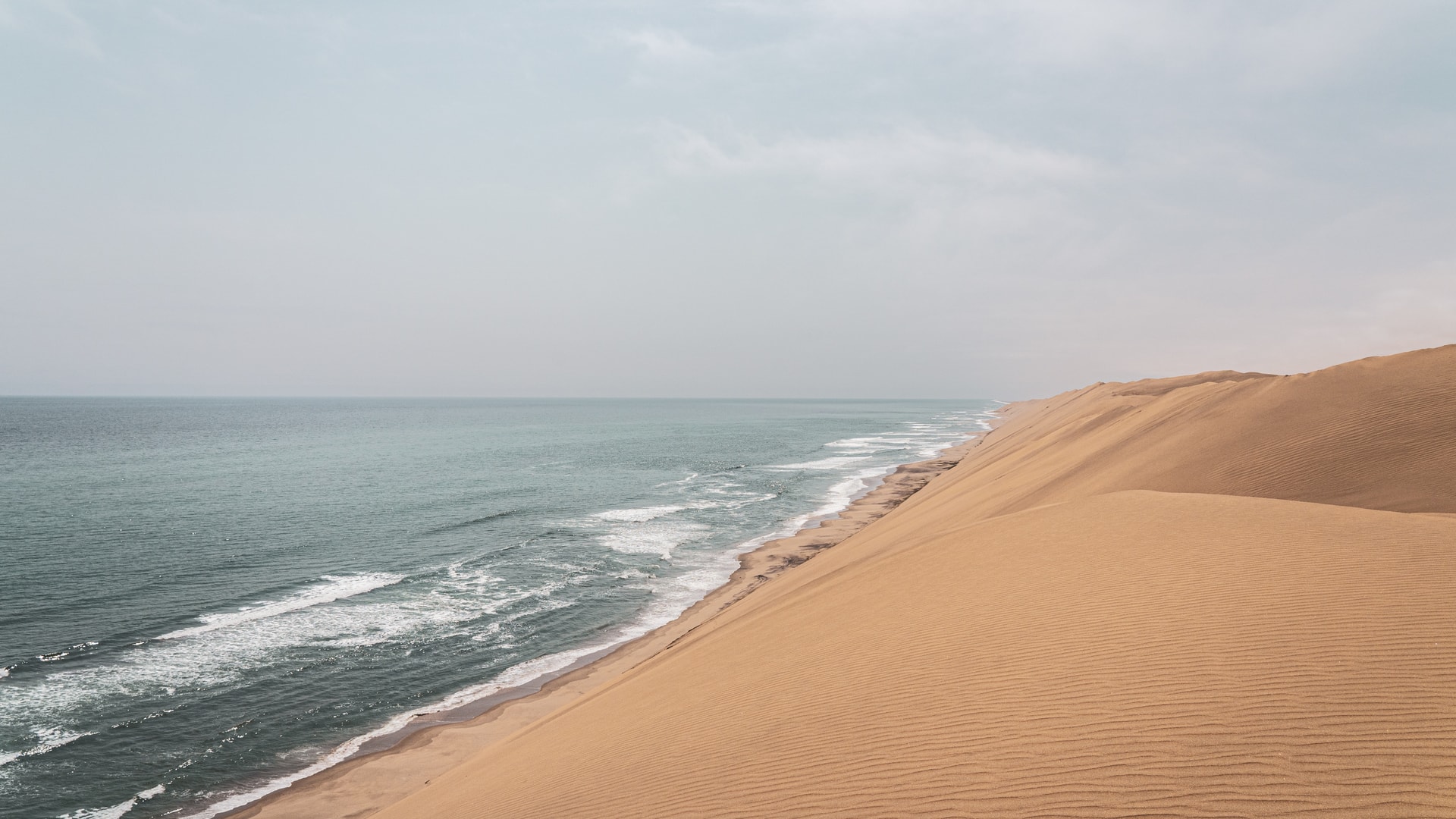
At Sandwich Harbour, the dunes stretch right out into the Atlantic Ocean. At low tide, your guide will drive along the tide line and over the dune ridges, and you’ll enjoy lunch with a glass of bubbly on top of a dune. Those who prefer to head out onto the water can take a catamaran trip across the Walvis Bay lagoon, where you’ll spot pelicans, seals and, usually, dolphins too.

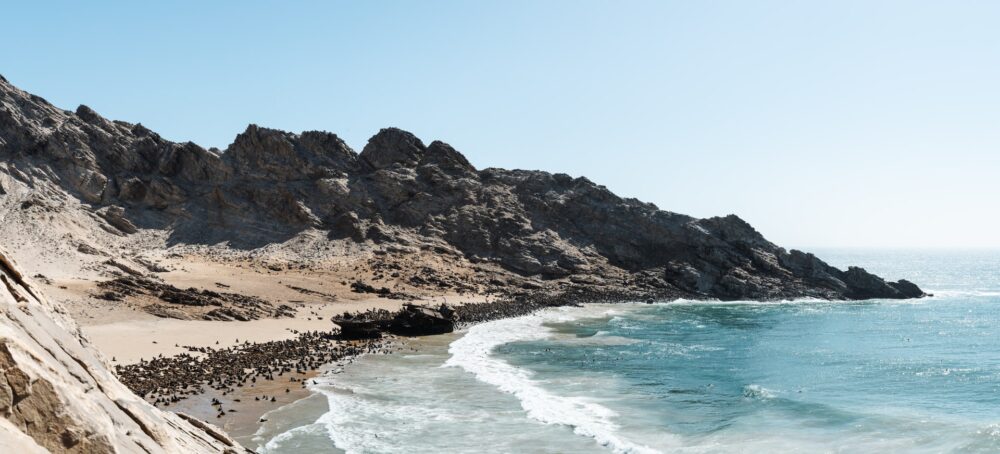
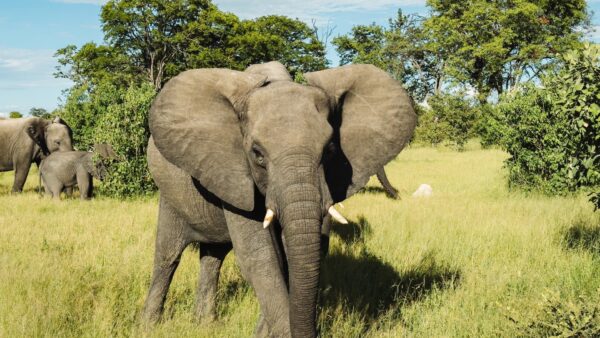
You’ll fly in a small plane along the coast, past shipwrecks and seal colonies, to Hoanib. The camp has eight rooms and is situated in a private concession covering 320,000 hectares between the mountains and the coast; there’s no one else around. In the afternoon, you’ll see desert elephants, giraffes and oryx in a dry riverbed.

You’ll fly to Möwe Bay and drive past the Cape fur seal colony at Cape Frio. Brown hyenas, which feed on the seals, roam the edges of the colony. Back at camp, you’ll join the researchers from the Desert Lion Project in search of the desert lions.

You will visit a Himba family in the Kaokoveld. The camp has an established arrangement with this community, so the visit takes the form of a conversation; your guide will translate. Afterwards, you will walk past welwitschias; some are over a thousand years old.

After a flight of just over an hour, you’ll arrive at Ongava Lodge: chalets set on a hillside, with views over the reserve and a waterhole. The private reserve lies on the southern border of Etosha, opposite the Andersson Gate. In the evening, black rhinos often come to drink at the floodlit waterhole.

You’ll spend a whole day in the park with a picnic basket, heading right to the edge of the salt pan at Halali. In the dry season, hundreds of animals can sometimes gather at a single waterhole at the same time: elephants, zebras, wildebeest and springboks, along with the lions lying in wait for them.

Things that are not allowed in the national park are permitted on the private reserve. In the morning, you’ll set off on foot with an experienced ranger in search of white and black rhinos, and in the evening you’ll go on a night safari with a torch.

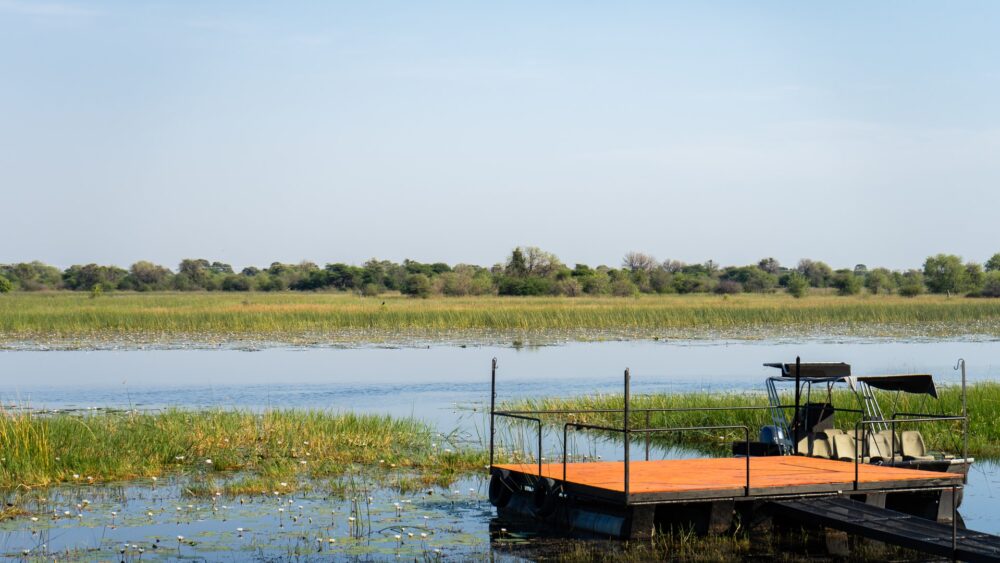
A direct charter flight takes you over the Kalahari to Maun in just under three hours, after which you’ll continue to the delta in a small plane. Mombo is situated on Chief’s Island, in the heart of the Okavango, and is renowned for its big cats.

You’ll go on two extensive game drives a day, with a long break during the hottest part of the day. Lions, leopards, wild dogs and both species of rhino live in this part of the delta. You’ll round off the day with a sundowner.

You’ll have a private vehicle with your own guide, so you can decide for yourself how long you want to stay with a leopard. In the evening, you’ll dine under the stars.

A 45-minute flight will take you to Zarafa Camp: four tents on Lake Zibadianja, the source of the Savuti River, within a 130,000-hectare private concession. During the dry season, thousands of elephants gather here.

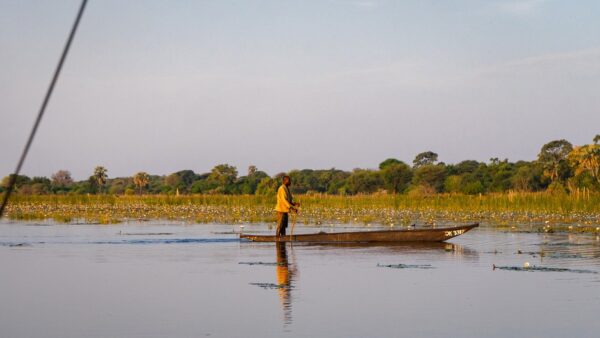
’In the morning, you’ll set off on foot with an experienced ranger. You’ll look out for tracks, plants and insects, at a pace that allows you to really get to know the bush. In the afternoon, you’ll take a flat-bottomed boat across the Selinda Spillway, and after dinner you’ll go on a night safari.

Your final full day on safari. If you’d like, we can set up a photography hide at the waterhole. In the evening, there’ll be a farewell dinner by the campfire.

After breakfast, you’ll fly to Kasane, where you’ll catch your flight via Johannesburg to Amsterdam. If you wish, you can extend your trip with two nights at Victoria Falls, an hour and a half’s drive from Kasane.

Best time to visit/
J
Rainy season: green plains, but because of all the water, the animals are more spread out.
F
It’s still rainy, with a chance of heavy showers in the north of the country.
M
The rains are easing off; the Namib remains dry, but the north is still green.
A
The dry season is beginning: clear skies and pleasant temperatures for desert excursions.
M
Dry and sunny – perfect weather for the Namib Desert and Etosha.
J
Cool, clear nights and dry days; in Etosha, the animals gather at the waterholes.
J
The driest and coolest time of year: ideal for a safari in Etosha National Park.
A
It’s dry and sunny, and you’ll see lots of animals around the wells.
S
It’s getting warmer, but it’s staying dry: it’s still the peak season for safaris.
O
Warm, dry days; the last month before the rains start again.
N
The first rains may be on their way, and it is getting hotter and hotter in the Kalahari.
D
Start of the rainy season: warm, with a chance of thunderstorms in the afternoon.
DearGoodAverage period
More about Namibia

Namibia is a country of vast deserts, such as the Kalahari and the Namib. In the red sand dunes of Sossusvlei, you can witness spectacular sunrises, and there are sweeping views and magnificent parks, such as Etosha, the Waterberg Plateau and the Namib-Naukluft Park. The flora and fauna are also remarkable, such as the quiver tree. It owes its name to the San people, who use its hollow branches to make quivers for arrows.

Namibia is vast and sparsely populated. We prefer to arrange for you to travel with your own driver-guide or by small aeroplane, so that you don’t have to drive yourself and can relax and enjoy the scenery. Of course, you can also hire a car. There is a wide choice of luxury hotels and lodges in Namibia.

J
Rainy season: the countryside is green and lush, but all the water makes the animals harder to spot.
F
Still well into the rainy season: brilliant for birdwatchers, less suitable for a traditional safari.
M
The rains are easing off, but the vegetation is still dense; this makes the safari trips a bit more difficult.
A
The dry season is beginning; the bush is turning yellow and animals are heading for the last remaining waterholes.
M
Dry and pleasant: warm days, cool nights and excellent views of the animals.
J
The driest period: the animals gather around the scarce water sources. A prime month for a safari.
J
Cool, clear days and the highest water levels in the Okavango Delta: one of the best months for a safari.
A
Peak season: dry, sunny and the best time of year to spot wildlife.
S
Warmer, but still dry: the animals are staying close to the scarce water sources. Ideal for a safari.
O
It’s been a hot month, but there are never as many animals gathered at the last remaining waterholes as there are now.
N
The first rains are falling and the heat is breaking: the transition to the green season.
D
The rainy season is getting underway: warm and humid, with a chance of thunderstorms in the afternoon.
DearGoodAverage period
More about Botswana

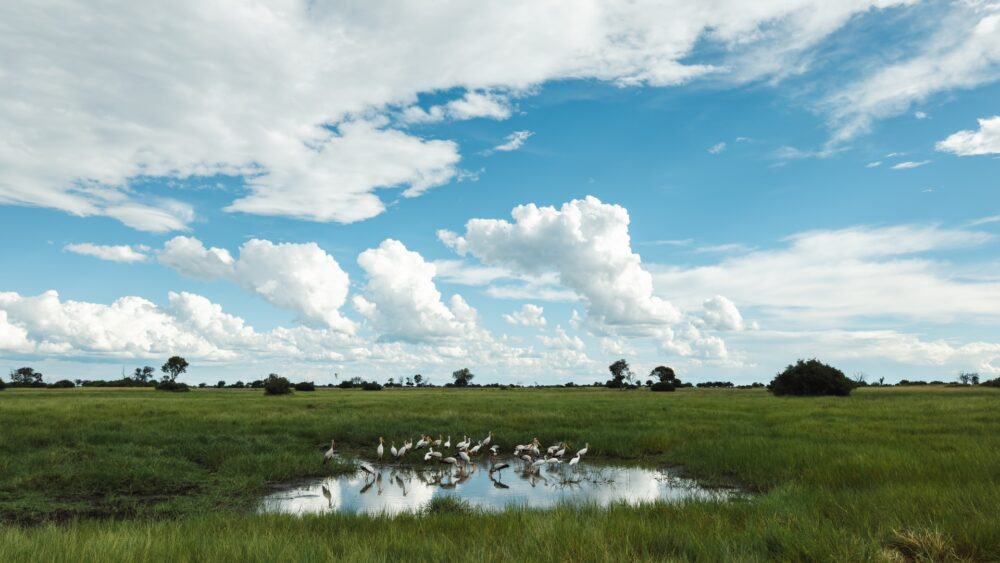
Botswana is almost synonymous with ‘safari’: the whole country is one vast nature reserve. Much of it consists of savannah, interspersed with sand dunes and desert. Chobe National Park is home to the world’s largest elephant population. The Okavango Delta is largely accessible only by light aircraft, boat or mokoro, and is a paradise for birdwatchers.

Botswana has a number of luxurious and very atmospheric safari lodges and camps, where you’ll want for nothing.

Need more inspiration?

Below you will find more trips and addresses that we have put together with the same care.

Botswana and South Africa: from Kruger National Park to the Okavango Delta and Linyanti
Journey
15-day private tour
Botswana and South Africa: from Kruger National Park to the Okavango Delta and Linyanti
Africa – Botswana, Africa – South Africa – Kruger National Park
FromIndicative price per person based on two people sharing, for this 15-day trip. Includes a flight worth €850, administration fees, the Calamity Fund and SGR. Flight and hotel prices vary from day to day; your actual price will depend on your travel dates, room type and flights. Prices are higher during the high season and at Christmas.
€59,700
Exclusive The suite or the best room, at intimate establishments, and all in complete privacy.
See more
Botswana, Zimbabwe and Zambia: from the Okavango Delta to Victoria Falls
Journey
21-day private tour
Botswana, Zimbabwe and Zambia: from the Okavango Delta to Victoria Falls
Africa – Botswana, Africa – Zimbabwe, Africa – Zambia
FromIndicative price per person based on two people sharing, for this 21-day trip in May. Includes a business class flight worth €4,900, administration fees, the Calamity Fund and SGR. Flight and hotel prices vary from day to day; your actual price will depend on your travel dates, room type and flights. Prices are higher from June to October and over Christmas.
€62,300
Exclusive The suite or the best room, at intimate establishments, and all in complete privacy.
See more
Botswana: the salt pans, the Okavango Delta, Linyanti and Chobe
Journey
15-day private tour
Botswana: the salt pans, the Okavango Delta, Linyanti and Chobe
Africa – Botswana
FromIndicative price per person based on two people sharing, for this 15-day trip in May. Includes a flight worth €1,450, administration fees, the Calamity Fund and SGR. Flight and hotel prices vary from day to day; your actual price will depend on your travel dates, room type and flights. From June to October inclusive and over Christmas, the price is higher.
€52,350
Exclusive The suite or the best room, at intimate establishments, and all in complete privacy.
See more
Namibia: a dune expedition through the Sperrgebiet, from Lüderitz to Swakopmund
Journey
15-day dune expedition
Namibia: a dune expedition through the Sperrgebiet, from Lüderitz to Swakopmund
Africa – Namibia
FromIndicative price per person based on two people sharing, for this 15-day trip. Includes a flight worth €1,000, administration fees, the Calamity Fund and SGR. Flight and hotel prices vary from day to day; your actual price will depend on your travel dates, room type and flights. Prices are higher during the high season and at Christmas.
€17,150
Signature Hotels and places we know personally, with guidance from the Netherlands.
See more
Namibia and Botswana: from the dunes of Sossusvlei to the Okavango Delta

Would you like to travel from the dunes to the delta?